Space Nova vs Nearby Listings: How to Use Transaction Data for Reference
Buying an industrial unit is a different game from buying a typical condo. The price per square foot looks familiar, but the drivers behind it are not. Unit depth, loading layout, access rules, strata structure, floor level, and the reality of completion timing all matter, and they show up only indirectly when you start comparing to older deals.
That is exactly why transaction data remains useful even when you are comparing against a new launch like Space Nova. The right approach is not to force-fit a nearby transaction to a specific Space Nova figure. Instead, you use nearby deals to build a reference range for how the market has valued similar industrial space on comparable terms, then adjust your expectations based on what Space Nova is offering.
Space Nova is a freehold B1 (clean) industrial development located at 21 New Industrial Road, Singapore 536208. It is developed by JVA NIR Pte Ltd. The project comprises 47 strata units across 7 storeys, with expected completion or TOP around 2028 to 2029, depending on the page referenced. Published unit sizes run roughly from about 1,625 sqft to 2,917 sqft. Official materials describe the site as being in the Tai Seng / Bartley precinct, and the project is also described with District 14 / 19 in some pages, while keeping the address consistent at 21 New Industrial Road.
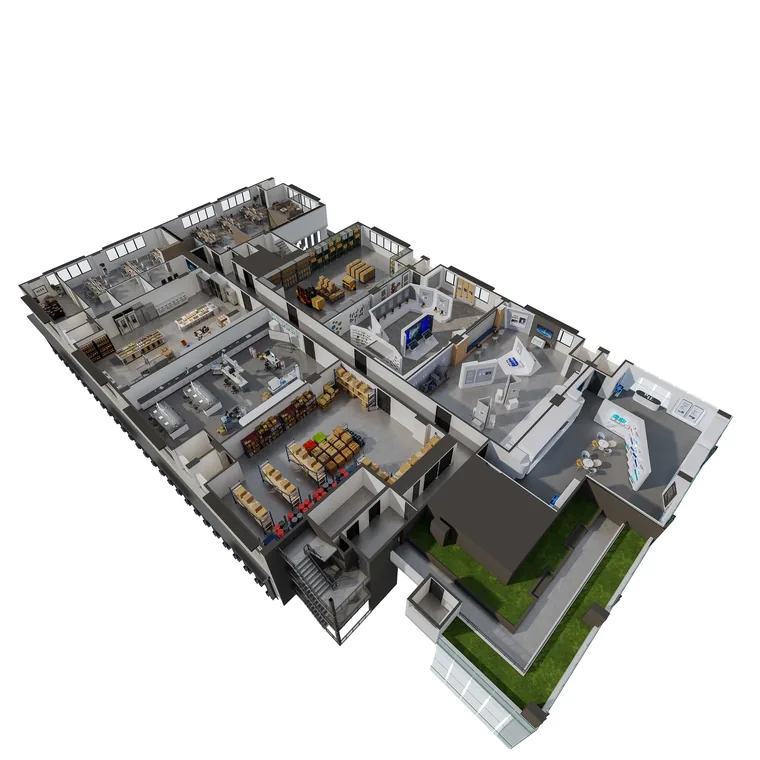
On the product side, the floor plans indicate that lower floors include ramp-up and loading/unloading access, while Level 4 includes a communal sky terrace. The site plan highlights the ground-level circulation and operational elements such as drop-off, passenger and service lifts, bicycle parking, EV charging lots, loading/unloading bays, and other site facilities like the bin centre and relevant operational points. In other words, this is not just “space with a price tag”, it is a designed industrial environment. Transaction data still matters, but it has to be interpreted through that lens.
This article walks through how to use nearby transaction data for reference when you are evaluating Space Nova versus other listings around New Industrial Road, including what to watch for when the available transaction information is not cleanly tied to Space Nova itself.
Why nearby transactions can guide you, even for a new launch
A new launch like Space Nova is priced based on a mix of the developer’s cost structure, the asset’s intended usability, demand at the time of launch, and the expected improvement in the tenant or buyer experience versus older stock. Nearby transactions, on the other hand, are pricing the market’s view of what older industrial properties have already cleared for.
Those two things are not the same, but they are connected.
When you look at nearby deals, you are trying to answer three practical questions:
First, what PSF range has the market accepted for industrial space on New Industrial Road and adjacent micro-areas. Second, how much variation exists by floor level or by the type of industrial configuration buyers typically want. Third, whether the latest “market clearing” signals are moving upward or staying flat relative to earlier periods.
If you skip this step, it is easy to overreact to a single new launch price point. If you do it right, nearby transactions become a reality check that helps you decide whether Space Nova pricing is aggressive, reasonable, or rich for the specific characteristics you care about.
One important caveat from experience: transaction pages that appear “nearby” may reflect deals for generic industrial properties in the road area, not necessarily the specific building or the same strata structure. In the verified context you provided, recent transaction information found for New Industrial Road industrial properties appears to be for nearby industrial properties in general, and not clearly for Space Nova specifically. That is not useless information, but it does change how you should use it. You treat it as a regional reference range, not as direct comparables to the unit you are considering.
Start with what you can verify about Space Nova’s product, then compare
Before you open any transaction screen, anchor your comparison on what Space Nova actually is. Even if you are only using transactions as a reference band, your adjustments depend on product facts.
Here are the verified points that matter most for comparing pricing and value logic:
Space Nova is freehold and B1 (clean). Freehold tends to hold long-term demand better because buyers plan for longer holding periods without worrying about lease expiry. The “clean” B1 classification typically aligns with a wider range of permitted uses than more industrially restrictive categories, which can broaden buyer or tenant interest. That can influence how aggressively the market prices it compared with units that have different classification constraints.
Space Nova has 47 strata units across 7 storeys. That strata layout means individual units may trade differently from entire factory buildings or older single-tenant industrial premises. Buyers may be paying for operational convenience, designed access, and the ability to own a discrete unit within a multi-storey industrial environment.
For floor-level usability, the official floor plan notes that lower floors have ramp-up and loading/unloading access, while Level 4 includes a communal sky terrace. Those details often show up indirectly in how buyers value the location of a unit within the stack. A transaction record for an older site might not give you the same level of configuration detail, so your job is to map “floor usability” as best you can rather than pretending every PSF figure belongs to the same kind of access.
Finally, Space Nova unit sizes run roughly from about 1,625 sqft to 2,917 sqft. Transaction data can be noisy because older industrial stock sometimes has irregular sizes or different layouts. The closer the size and effective utility, the more meaningful the reference.
If you do nothing else, this step prevents you from comparing “apples to oranges” while thinking you are comparing “apples to apples.”
What to extract from nearby transaction data (so you can adjust it)
When you review nearby transactions, you will see a mix of dates, sizes, floors, and conditions. Many screens show only summary fields. That is fine, as long as you extract the right fields and apply cautious adjustments.
Use this practical method: for each transaction you consider, capture the essentials that let you normalize the PSF.
A short capture checklist (from any transaction screen)
- Transaction date and whether it is an actual sale or an indicative figure
- Unit size (and how you calculate PSF, gross or net)
- Floor level or any access-related descriptor
- Property type label (industrial, factory, strata industrial, or similar)
- Location granularity (street or exact site, not just “nearby”)
You can do this in a spreadsheet, even a simple one. The payoff is that you can separate “direction of pricing” from “random noise”. Two deals at very different dates can still tell you the broad movement, but only if you keep them categorized.
For Space Nova specifically, remember the verified context: nearby transaction data you found appears to be general for New Industrial Road industrial properties rather than clearly for Space Nova. So you should treat the extracted numbers as a regional reference band, not a direct match.
How to translate nearby deals into a range you can use
Let’s say your transaction screen gives Space Nova New Industrial Road you several deals for industrial properties on or around New Industrial Road. You will almost certainly see a spread in PSF. That spread comes from time, configuration, and how much “usable functionality” each unit delivers.
Instead of seeking one perfect PSF, build a reference range and then decide where Space Nova fits.
A useful way to do this:
Compare the general PSF range you see for industrial properties on New Industrial Road to the indicative starting prices and PSFs referenced in official pricing pages and third-party listing pages. In the verified context, both types of pages indicate indicative starting prices in the low-$2 million range, with PSFs roughly in the mid-$1,000s to low-$2,000s, varying by unit and floor.
If the nearby transaction PSF range is significantly lower than Space Nova’s indicative PSF band, you start asking whether the market is paying a premium for the “new designed multi-storey strata industrial” concept, for freehold, for B1 cleanliness, or simply because the new launch pricing is optimistic. If nearby PSFs sit closer to Space Nova’s indicative band, then pricing feels more aligned with market clearing behavior.
If nearby PSFs appear higher than Space Nova’s indicative band, you then question whether the higher deals were better positioned, had different access, were larger or smaller in ways that changed buyer perception, or simply occurred during a stronger demand period.
This is the judgment call part. Transaction data does not come with a neat adjustment calculator for every variable, so you use ranges, then make decisions based on what Space Nova is clearly offering.
The biggest traps when the transaction is “nearby” but not comparable
There are several ways comparisons go wrong, even when you are being careful.
The first trap is assuming “same road” means “same asset type.” In the verified context, the nearby transaction data you found is described as being for New Industrial Road industrial properties generally. That can include different subtypes, such as older single-tenanted factory configurations or properties that do not share the same multi-storey strata logic.
The second trap is assuming PSF is the whole story. Industrial buyers care about operational fit. Space Nova’s floor plan notes ramp-up and loading/unloading access on lower floors, plus Level 4’s communal sky terrace. Those features are not guaranteed to exist in older stock, even if the address looks close on a map.
The third trap is ignoring timing. Industrial markets do not move in lockstep. If the transaction dates are older, the PSF can mislead you. If they are very recent, they may reflect a temporary window of demand. Either way, you need to anchor to dates.
Here is where careful interpretation matters most. You do not need every variable to match perfectly, but you need enough match to justify the reference.
Common pitfalls to avoid
- Treating “industrial near New Industrial Road” as equivalent to Space Nova’s strata multi-storey setup
- Mixing different floor usability types without adjusting expectations
- Comparing PSF without considering whether the size and layout match your intended operational use
- Using old transactions as if they reflect current pricing power
- Overreacting to one or two outlier deals without a range
Use Space Nova’s official materials to adjust the transaction-based reference range
If you are going to use transaction data, you also need a disciplined way to understand what you are comparing against. Space Nova’s official site materials are helpful here, because they give you product and site configuration context.
From the verified context, the official site includes a video tour/gallery, a pricing page, a balance-units chart, a showflat/private viewing appointment page, and contact details for inquiries. There is also an e-brochure that describes floor plans, unit strata areas, the distribution chart, technical specifications, facilities, and connectivity information. The site plan page lists detailed site-level features including loading/unloading bays, EV charging lots, bike parking, and the key circulation points for vehicles and lifts.
That information lets you interpret what you see in transaction deals. If nearby transactions include older stock with limited modern lift and loading efficiency, then a higher or lower PSF for those deals might reflect usability differences, not just location.
Also, Space Nova has a balance-units chart page where availability changes frequently and remaining units are shown by floor and type. That matters for your decision-making, because transaction data only tells you what cleared before. Availability and buyer competition can shift what sellers accept next, even if the road stays the same.
In practice, this creates a better decision process: you use transaction data to set a reference band, then you validate whether current buyer behavior for this specific launch is pushing prices at the edges.
How to sanity-check pricing when you do not have “direct” transaction comps for Space Nova
A frequent frustration is that you cannot find clean “Space Nova transaction” data, or transaction screens you find only show nearby industrial properties in general. Based on your verified context, that is exactly what happened here: recent transaction information appears to be for nearby New Industrial Road industrial properties generally, not clearly tied to Space Nova.
So how do you still sanity-check the numbers?
You do it by triangulation:
- Take the indicative starting price and PSF ranges that have been published for Space Nova, noting they vary by unit and floor and are described in the low-$2 million range with PSFs roughly in the mid-$1,000s to low-$2,000s.
- Compare that to the general PSF range seen in nearby industrial transactions on the road.
- Adjust mentally for the fact that Space Nova is freehold, B1 clean, and designed for multi-storey strata operation, including ramp-up and loading/unloading access on lower floors and communal elements at Level 4.
If Space Nova’s indicative band sits within or near the broader nearby transaction PSF range after you account for these differences, pricing looks more defensible. If it sits outside the range, the question becomes: is the premium (or discount) explained by tangible product features you can verify from the official floor plans and site plan?
This is also where you can use the “book viewing appointment” and any available Space Nova video and showflat materials. You are not looking for marketing polish, you are checking how practical the design feels. A deal can look fine on paper and feel awkward in operation. In industrial units, buyers discover that quickly once they imagine vehicle movement, lift use, and loading flow.
A practical example: deciding between floors using transactions as a reference, not a rule
Suppose you are choosing between a lower-floor unit and a mid-level unit. Even without having a perfect comparable for Space Nova, you can use nearby transaction data to inform your floor premium expectations.
Space Nova’s floor plan indicates ramp-up and loading/unloading access on lower floors. That usually supports stronger buyer demand because it reduces friction in daily operations. Higher floors can still work, but buyers may accept a lower PSF when the operational convenience is reduced.
Now, if your nearby transaction dataset shows higher PSFs for ground or loading-access floors and lower PSFs for upper floors, you have confirmation that the market has historically valued access. If the dataset is mixed, you interpret that as a sign the market may be choosing other attributes too, such as unit configuration, size, or building condition.
The trade-off is judgment. Transaction data can guide, but it cannot replace unit-specific inspection.
If you do nothing else, at least align your decision with the verified product logic: lower floors at Space Nova are designed with more direct operational access, so it is reasonable to expect floors with loading convenience to hold value better, all else equal.
How to incorporate availability and timing into your reference model
Space Nova’s balance-units chart shows that availability changes frequently and remaining units are displayed by floor and type. Even if you are using transaction history, availability affects price negotiation.
When fewer units remain at a given floor type, buyers may have less leverage unless they are willing to switch to a different floor or configuration. That can keep the developer or seller anchored to higher PSF bands even if nearby transactions soften.
Conversely, if availability is heavy in a certain category, you may find more negotiation room, and Space Nova’s pricing could track more closely to the regional transaction range.
This is why “transaction data plus availability reality” tends to beat “transaction data only.” It is also why watching Space Nova’s official balance-units information as you shortlist matters.
For completeness, Space Nova has an official site with pages dedicated to pricing and balance units, plus appointment flows. If you are serious, you want the current picture, not a snapshot from the day you first started reading.
Where “project details” help you avoid a category mistake
One last point that often gets overlooked: industrial buyers sometimes compare to the wrong category because the search results look similar.
Space Nova’s project details and official materials make it clear this is a B1 (clean) industrial development, a freehold asset, and a multi-storey strata arrangement with 47 units across 7 storeys.
If your nearby transaction screen includes deals that are not in the same category, you risk building a misleading reference range.
For example, a transaction for industrial space that is not freehold, or that has different restrictions, can trade differently even at the same road address. Similarly, deals for larger warehouse-style buildings may have different buyer demographics and different transaction mechanics than strata units.
So when you use nearby transactions for reference, keep an eye on the property type labels and the context. If the screen only says “industrial,” you still can use it, but you should treat it as a broader market temperature rather than a strict comp set.
A short decision workflow that stays grounded
If you want a workflow that does not collapse into guesswork, here is the simplest pattern that works well in industrial deals:
First, pull Space Nova’s confirmed product points: freehold, B1 clean, address at 21 New Industrial Road, the strata setup with 47 units across 7 storeys, the range of unit sizes roughly from 1,625 sqft to 2,917 sqft, and the floor plan logic about ramp-up and loading access on lower floors and Level 4’s sky terrace.
Second, gather nearby transaction data for New Industrial Road industrial properties and build a PSF range by date. Capture the key attributes you can, especially unit size and floor level information.
Third, compare Space Nova’s published indicative starting price band (low-$2 million range) and PSF band (mid-$1,000s to low-$2,000s) against that transaction-derived PSF range, adjusting mentally for the fact that Space Nova is new and designed as a multi-storey strata industrial environment.
Finally, validate your assumptions by checking the current Space Nova availability situation through the official balance-units chart and, if needed, using the showflat or appointment route. A good comparison survives contact with the actual building.
This approach keeps the transaction data honest. It guides your reference range, it does not pretend to be a perfect comparable set for Space Nova itself.
What to ask when you book a viewing (so the numbers become usable)
Transaction data can tell you what the market has paid. A viewing tells you whether your unit can realistically perform as intended.
When you attend Space Nova through the official viewing or appointment process, focus your questions on operational fit and on details that might explain differences between nearby deals and your expectations.
If you want a set of questions that naturally ties back to transaction reference thinking, ask about how loading and ramp access works for the exact floor you are considering, what the communal or operational elements feel like day to day, and how lift and service movement supports the kind of business you imagine.
Space Nova’s official materials already point you to these themes through its floor plan and site plan logic. The viewing is where you confirm the lived reality.
Also, ask for any official clarification around unit strata areas and the exact unit strata distribution where relevant, since transaction comparisons often break down if the definitions of area are not aligned.
Bottom line: treat nearby transactions as a temperature reading, then calibrate
Space Nova sits in a specific industrial lane, freehold and B1 clean at 21 New Industrial Road, built as a designed multi-storey strata development. Nearby listings and nearby transactions on New Industrial Road can help you understand whether the market’s willingness to pay for industrial space is moving, staying steady, or diverging across floors.
But because the verified transaction information you found appears to be general nearby New Industrial Road industrial properties, you should treat it as reference temperature, not a direct “same building” comparable. The correct use is to build a PSF range from nearby deals, compare it to Space Nova’s indicative pricing and PSF band, then adjust for the verified product differences: freehold status, B1 clean classification, strata multi-storey configuration, and floor-level operational design such as loading access on lower floors.
Do that, and your decision stops being a leap and becomes a calibrated judgment. That is the real advantage of transaction data when you are evaluating a new launch like Space Nova.