Strata Industrial Units Singapore: Technical Checks That Matter for Suitability
Strata industrial units in Singapore look deceptively simple from the outside. You see a unit, you picture trucks coming in and out, you think about rent, you do the numbers, and you move fast because industrial opportunities can disappear.
Then you tour the premises properly, you ask about the approved use, the “physics” of the Space Nova showflat space, and how the building functions day to day. The reality is that suitability is not just about whether the unit is for sale or whether it is in a popular district. It is about whether the unit’s zoning, approved use quantum, and the practical building specs line up with the way your business actually operates.
Below is the set of technical checks I’ve learned to treat as non-negotiable when evaluating strata industrial property Singapore, especially if you are buying industrial property Singapore for business operations or industrial property investment Singapore.
Why “strata industrial” still behaves like an industrial building, not an office
In strata industrial units Singapore, you are buying space inside a larger industrial building. That matters because the building is governed by the approved development controls, including B1 industrial zoning rules and how much of the floor area must be used for industrial purposes.
A lot of buyers focus on finishes, lighting, and whether the unit feels “new enough.” Those are fit-out considerations. But suitability starts earlier, at the approvals level.
For B1 industrial zoning, the intent is mainly for clean industry, light industry, warehouses, and certain public utility and telecom uses. That zoning logic includes nuisance buffering constraints. The planning guidance indicates that uses needing a nuisance buffer of more than 50m are generally not allowed, while some general industrial uses may be considered case by case if buffer requirements are met.
That one concept changes everything. If your trade can create a noise, fumes, heat, or other impact that pushes beyond what the zoning expects, you can end up with a unit that technically exists, but does not behave as a “usable” asset for your specific operations or for leasing it out at your target profile.
The B1 use-quantum check: where many buyers get surprised
One technical detail you should check early is the B1 “use quantum” requirement. The guidance states that at least 60% of the floor area, or GFA, in a B1 development or strata unit must be used for industrial purposes. The remaining area is limited to ancillary or supporting uses and approved secondary uses.
This matters in two ways.
First, if you plan to use the unit for a business that is not clearly industrial in nature, you may run into constraints on how much of the unit can be used for your actual activities. For example, if your operations include significant office-like components or customer-facing activities, you need to understand whether those components count as industrial, ancillary, or approved secondary uses within the B1 framework.
Second, if you are buying as an investor, industrial property rental yield Singapore depends not only on lease demand, but on the unit’s continued fit for industrial use. If tenants need the space for activities that do not align with what B1 expects, your rental pool narrows.
This is why a “good deal” can become a slow deal. A strata unit can look cheap on paper, but if the buyer segment that can legitimately operate there is smaller than you thought, liquidity becomes trade-specific.
Allowed uses in B1: match your trade, not just your industry label
The B1 allowable uses guidance points to B1 units commonly suiting light manufacturing, food packing or processing-related uses, e-business, printing or publishing, media, and similar clean uses. It also flags that some non-industrial uses need separate approval or are constrained.
In practice, I treat this as a matching exercise between your trade and the zoning intent.
A useful way to think about it is to avoid relying on generic labels like “logistics” or “manufacturing.” Instead, focus on whether your actual workflow is closer to the clean end of industrial uses, and whether the main activities are industrial in substance, not only in marketing language.
If you run an operation that is borderline, you want clarity before you commit. Once you have a long lease term, or you have financed the industrial property loan Singapore based on a cashflow model, you do not want to discover after move-in that your intended usage cannot be supported the way you assumed.
B1 vs B2 industrial zoning: the difference shows up in “what the building is built for”
Buyers often ask for B1 vs B2 industrial zoning as if it is a simple yes-or-no classification. It is not.
B2 is the heavier-industrial category. Based on JTC materials on B2 unit listings, B2 units commonly reflect higher floor loading and different height specs than B1 flatted factories. That is a strong signal that B2 is intended to support heavier industrial activities, not just because of paperwork, but because of the physical demands that heavier uses impose on the building.
If your business needs the heavier end, insisting on B1 can force compromises, such as altered equipment, different storage patterns, or reduced operational efficiency. If your business is genuinely light and clean, pushing for B2 can overpay for specs you do not need, and it may reduce your tenant pool if your ideal tenants do not require heavier capacity.
So the check is not “which zoning is better.” The check is whether the zoning and the unit’s physical capacity align with your process.
Freehold vs leasehold industrial Singapore: scarcity is real, but so are planning realities
There is a practical reason freehold industrial space in Singapore feels scarce. The context for industrial supply includes that much new industrial supply is on leasehold land. JTC’s unit pages commonly show 60-year, 30-year, or 20-year lease terms for industrial sites depending on the estate and product.
That does not automatically make leasehold unattractive. It does mean you must incorporate lease tenure properly into your holding horizon, exit planning, and rental strategy.
Also remember that the approved use framework still governs operations regardless of whether the unit is freehold industrial property Singapore or leasehold. You are not escaping use-quantum constraints by buying a different tenure. You are changing the length of runway for value appreciation and holding.
When you are evaluating freehold vs leasehold industrial Singapore, I recommend you treat tenure as a cashflow and exit variable, then tie the unit’s technical fit back to industrial suitability. Tenure without operational fit is how you end up overpaying for a property that your own business cannot comfortably use, or that future tenants may not want.
New launch industrial property Singapore vs existing strata: ramp-up and access can change your whole operation
If you are comparing a new launch industrial property Singapore against an existing strata industrial unit, pay attention to logistics design.
The context around ramp-up factories is that they provide direct vehicular access to units for loading and unloading, while flatted factories are generally accessed via common corridors, lifts, and loading bays. Layout choice affects logistics efficiency, truck access, and fit-out flexibility.
Even within the “industrial” category, those differences show up in daily friction. If your operations require frequent deliveries, high turnover of goods, or bulky items moving on a tight schedule, access design can impact productivity more than buyers expect.
If you are planning to ramp-up industrial units Singapore with a growing operation, access efficiency is not a nice-to-have. It can determine whether you can scale without reworking your workflow.
The technical checks that matter most in a strata unit tour
A strata unit tour is where “paper suitability” either becomes real operational suitability or collapses into frustration.
Key technical checks for strata industrial units include floor loading, ceiling height, goods-lift access, loading-bay provision, and whether the trade matches the approved use. Those checks are not theoretical, they are the difference between running smoothly and paying for fit-out mistakes you cannot reverse.
Here are the practical checks I prioritize when I’m deciding whether to proceed with strata industrial units Singapore.
Quick technical fit checklist (use it on every viewing)
- Floor loading and equipment weight needs, so your storage and machinery plans do not exceed the building’s structural capability
- Ceiling height, because clearance affects racking, ducting, and any hoists or suspended systems you might need
- Goods-lift access and routing, because the building’s vertical and corridor system determines how fast goods can move
- Loading-bay provision and truck interface, so inbound and outbound schedules can actually work
- Approved use alignment, since B1 requires industrial use-quantum and the main business must fit the intended use range
I keep this checklist short on purpose. During negotiations, people expand the list into thirty items. On-site, too many questions slow the process and distract from the few facts that genuinely determine usability.
The “approved use alignment” check: treat it like a business requirement, not a zoning trivia point
Approved use alignment is the bridge between zoning rules and everyday business.
For B1, you are expected to hit the industrial use-quantum expectation of at least 60% of floor area/GFA used for industrial purposes, with ancillary and approved secondary uses limited to the remaining area. If your business model depends on using most of the space for non-industrial activity, you are building your plan on a risk.
And if you are buying industrial property investment Singapore, that risk transfers to your tenant profile. Tenants are not looking only at price. They are looking at operational certainty, because any mismatch creates the headache of changing workflows or obtaining approvals.
This is also why I advise buyers to be conservative with “future business changes.” A strata unit can be a good fit for your current trade, but if you later shift to a use that does not comfortably sit within what B1 supports, Space Nova 21 New Industrial Road the unit may become harder to lease or harder to validate.
City-fringe industrial property Singapore: Tai Seng and Paya Lebar are about operations, not just demand
City-fringe industrial precincts such as Tai Seng and Paya Lebar, and other areas like Ubi, Kallang, and MacPherson, are often favoured for e-commerce, light manufacturing, R&D, and urban logistics because they are closer to workforce catchments and transport links.
From a fit perspective, those precincts tend to match the kind of “cleaner” industrial activity B1 allows. That does not mean every B1 unit there is automatically suitable. It means the tenant ecosystem you attract is more likely to want the same type of industrial usage that B1 supports.
If you are evaluating a unit in those kinds of clusters, a strong technical fit matters even more, because the tenants in these areas often run operations that depend on predictable access and quick throughput. If the goods-lift access, loading interfaces, or ceiling and floor loading constraints do not match the workflow, your potential rental pool shrinks quickly.
So yes, a Tai Seng industrial property or Paya Lebar industrial property can be appealing for location. But the location only works when the unit’s engineering and approved use reality can support your operations.
Rental yield logic: higher returns are possible, but liquidity is more sensitive
Industrial property rental yield Singapore can be attractive compared to some other asset classes. The reason, broadly, is that B1 use controls and industrial logistics needs create more defined tenant requirements. That can sometimes keep effective demand for correctly specced units strong.
But resale liquidity is generally more trade-specific and sensitive to factors like approved use, lease tenure, strata size, and building specs. This sensitivity comes directly from the use quantum requirement and from the fact that industrial users do not all share the same equipment needs.
If you buy with the intention to lease it out, your job is not only to “find tenants.” Your job is to confirm that the unit’s building specs match the industrial use profile that tenants will be looking for.
When the specs do not match, you may still lease the unit eventually, but you will spend time and discount to find a tenant whose equipment and workflow happen to fit.
Industrial property stamp duty Singapore and what surprises buyers should watch
Stamp duties are easy to misread if you come from residential property shopping.
On ABSD: industrial property is not subject to Additional Buyer’s Stamp Duty. ABSD applies to residential property acquisitions, while industrial transactions instead follow normal BSD rules. Seller’s stamp duty can apply on disposal for industrial property where applicable.
On SSD for industrial property: the holding period can trigger SSD on disposal. The context provided indicates seller’s stamp duty rates of 15% if sold within 1 year, 10% if sold within 1 to 2 years, 5% if sold within 2 to 3 years, and none after 3 years.
This is where strategy matters. If you buy industrial property Singapore with a plan that assumes a short holding period, you need to pressure-test how much SSD could eat into your exit return.
Also remember GST on new non-residential property transactions: if you buy a new non-residential property from a GST-registered seller or developer, GST is payable on the purchase, as buyers of non-residential properties must pay GST if the seller is GST-registered.
So your purchase economics are not only “price plus stamp duty.” They can include GST depending on whether the seller or developer is GST-registered and whether the transaction is a new non-residential property scenario.
Buying under company name: what changes, and what should not
Buying industrial property under company name is a common approach for assets used for business or held for investment.
The context here is mainly about stamp-duty treatment. IRAS stamp-duty rules treat entities differently from individuals mainly for residential ABSD purposes, while industrial SSD rules can apply on disposal regardless of buyer profile.
Practically, that means if you are planning to exit within the SSD time bands, the buyer profile does not protect you from SSD outcomes. Your holding period discipline still matters.
For industrial property investment Singapore, I often see buyers focus on whether company ownership affects upfront costs, and they underweight the operational and exit rules that apply when you sell.
Financing and industrial property loan Singapore: plan around lender assessment, not wishful math
Industrial property loan Singapore is typically assessed under commercial terms rather than residential housing loan rules. The context indicates that industrial buyers are assessed differently from residential buyers, and that financing for property investment generally depends on lender assessment, with non-residential loans under commercial terms rather than residential housing-loan rules.
Because lenders can vary in how they look at cashflow, business use, and risk, I treat financing as a gating factor rather than an afterthought. If the loan terms do not clear your underwriting assumptions, your “great deal” becomes a stress case.
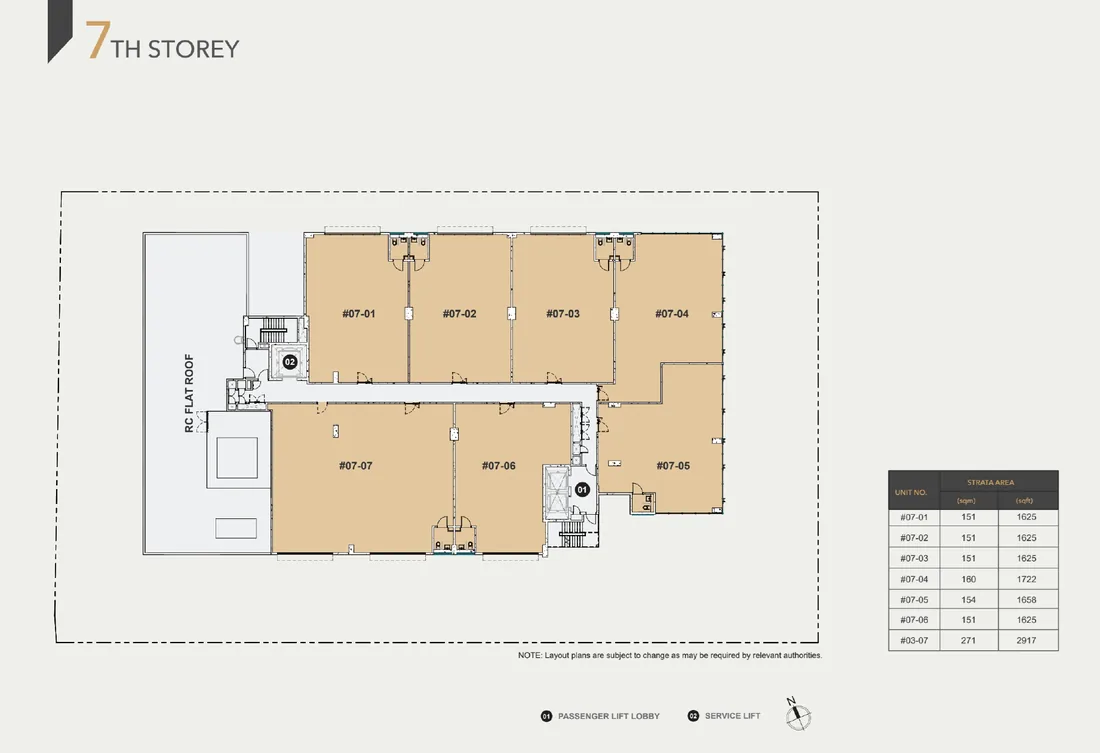
A practical way to handle this is to have your technical suitability confirmed early, so your business plan is defendable. When you can clearly show that the unit supports the logistics and approved use you intend to run, you are in a stronger position to support your financing narrative.
A few “edge cases” I’d rather catch early than after signing
There are a handful of situations that regularly cause buyers grief, even when they are smart and thorough.
First, assuming B1 flexibility is unlimited. B1 supports clean and light industrial activity, but the 60% industrial use-quantum rule and allowable use constraints mean you cannot treat the zoning as a generic “any trade” label.
Second, assuming the building layout works because the unit looks decent. Goods-lift access, loading-bay provision, and ceiling height are the kinds of specs that only become obvious on-site.
Third, confusing “near MRT and amenities” with “logistics efficiency.” City-fringe industrial property Singapore can be great for workforce and connectivity, but if the unit’s loading and internal access create bottlenecks, you lose the operational benefit.
Finally, underestimating lease tenure impact. Freehold vs leasehold industrial Singapore affects holding period planning, and it interacts with stamp duties and buyer liquidity.
Putting it all together: suitability is a chain, not a single factor
If you remember one principle, make it this: suitability in strata industrial units Singapore is a chain linking zoning intent, use quantum, approved use, and building engineering.
B1 planning expects industrial use at a meaningful proportion, at least 60% of floor area/GFA. B1’s intent emphasizes clean and light industrial activities, with nuisance buffering considerations that can limit heavier or more disruptive uses. The physical reality matters too, through floor loading, ceiling height, goods-lift access, and loading-bay provision. And when you choose between B1 vs B2 industrial zoning, you should expect different physical specs to reflect different operational demands.
Once you align those pieces, the rest becomes cleaner: underwriting for an industrial property loan Singapore, exit planning with industrial property stamp duty Singapore considerations like SSD holding-period bands, and rental strategy grounded in industrial tenant needs.
If you are looking at a Tai Seng industrial property, a Paya Lebar industrial property, or a unit elsewhere in a B1 cluster, keep the same mindset. The district sets your tenant ecosystem. The unit’s technical checks and approved use alignment determine whether that ecosystem can actually use your space profitably.
That is how you avoid the classic trap of buying an industrial asset that looks like an industrial unit, but does not operate like one.
If you want, tell me the zoning grade you are considering (B1 or B2), the unit type (flatted factory style or something else), and your intended trade in plain terms. I can help you map those technical checks to the exact operational risk points to ask about during viewing.